In This Article
ToggleTanmay and Ruchi came to our office with two brochures. One showed a line of matching homes, standing side by side. The other showed a single house with a garden around it. Both were in Indore. Both had three bedrooms. But one cost much more.
Ruchi asked us straight: “Are we paying extra just for the word villa, or is there a real difference?”
It is a fair question, and we hear it on almost every site visit. The row house vs villa choice looks like a money decision at first. In reality, it decides how much light enters your home, how much noise you hear, and how much freedom you have to change things later.
Let us answer it the same way we answered Tanmay and Ruchi.
What is a Row House?
If you have searched “what is row house” online, you have probably seen a short answer about shared walls. Here is the simple version.
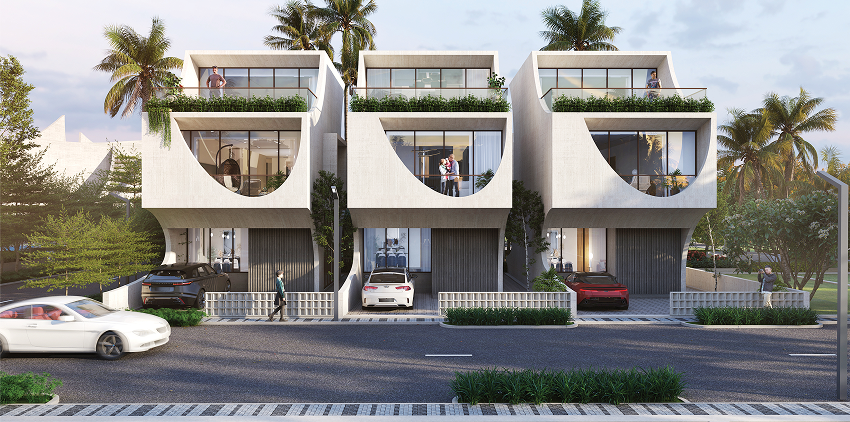
A row house is one home in a line of similar homes. Each home sits on its own small plot, but the walls touch.
- Middle house → shares 2 walls with neighbours
- Corner house → shares 1 wall, gets one open side (so it usually costs a little more)
How is a row house built?
The builder plans the whole row together. Same design, same height, same gate. This keeps the cost per home lower.
You own:
- (+) Your plot of land
- (+) Your house on it
- (+) Your own entrance and parking space
But:
- (-) The front look usually has to match the other homes
- (-) You may hear sounds through the shared wall
- (-) Light and air come mainly from the front and back
What size is a row house usually?
Most row houses are ground plus one floor on a compact plot. Sizes vary a lot by project, so always ask for the exact plot area and built-up area in writing.
What is a Villa, and How Is It Different?
A villa is a standalone house on its own plot. It does not share any wall with anyone.
That one detail changes a lot:
- (+) Light comes in from more sides
- (+) Fresh air moves through the house
- (+) Your neighbour’s TV stays in your neighbour’s house
- (+) You can plan a garden, a sit-out, or use the terrace your way
- (-) It costs more, because you are buying more land
- (-) More space means more cleaning and upkeep
Some buyers who like villas also think about farmhouses for even more space. If that is on your mind, read why the law treats villa and farmhouse ownership very differently before you decide.
Villa vs Row House Difference: Quick Comparison Table
Short on time? This table covers the main points.
| Questions you may have | Row house | Villa |
| Is it a separate building? | No, part of a row | Yes, standalone |
| How many walls are shared? | 1 or 2 | None |
| How big is the plot? | Smaller | Larger |
| How private is it? | Medium | High |
| How much natural light? | Front and back only | From most sides |
| Can I change the design? | Very little | Much more, within approved plans |
| How many cars can I park? | Usually 1 | Often 2 or more |
| Is upkeep easy? | Yes, less area | More work, more space |
| What is the price level? | Lower | Higher |
| Who is it best for? | Small families, first independent home | Bigger families, parents living with you |
The one villa vs row house difference to remember: a row house shares its walls, a villa shares only the community gate.
Row House vs Villa: How Much Will Each Cost You in Indore?
Let us break the cost into three simple parts.
1. The price of the house
Rates in Indore change by area, project, and time, so we will not throw random numbers at you. Here is what stays true:
Same area → villa costs more → because you get more land.
Building cost per square foot is not very different between the two. The land makes the gap.
2. Monthly maintenance
- Row house colony with few facilities → lower monthly charges
- Villa township with clubhouse, security, parks, power backup → higher monthly charges, but you use those services every day
Tip: Ask the builder what the monthly amount covers. Get it in writing.
3. Stamp duty and registration (the cost most people forget)
In Madhya Pradesh, you pay:
- Stamp duty → 7.5% of the property value (or the government guideline value, whichever is higher)
- Registration fee → 3%
- Total → 10.5% on top of the price
For the full list of documents and steps, see our guide to the property registration process in Indore.
Here is how 10.5% looks on two example budgets. These are sample numbers to show the math, not real prices.
| Cost | Row house (example ₹55 lakh) | Villa (example ₹1.2 crore) |
| Stamp duty (7.5%) | ₹4,12,500 | ₹9,00,000 |
| Registration fee (3%) | ₹1,65,000 | ₹3,60,000 |
| Total extra money needed | ₹5,77,500 | ₹12,60,000 |
Keep this amount ready separately. In most cases, it is not covered by your home loan.
Where Can You Find a Row House in Indore?
Row house projects usually come up where land is still affordable, but the city is growing towards it. If you are looking for a row house in Indore, start with:
- Outer parts of Bicholi Mardana
- Rau
- Khandwa Road
- Sanwer Road
- Newer layouts near the AB Bypass
A row house in Indore works well if you want your own front door and your own land without a villa-sized budget.
Tip: Visit on a weekday evening too, not only on Sunday morning. That is when you see the real traffic and noise.
Where are Gated Community Villas in Indore?
Super Corridor, AB Bypass Road, Nipania, Vijay Nagar and the MR 10 belt are popular areas for gated community villas in Indore. These areas have good roads, and offices, schools, and hospitals are growing around them.
Why do families pick gated community villas in Indore over an open colony house?
Privacy inside your walls + security at the gate = peace of mind.
To see what features buyers usually ask about, check our page on premium villas in Indore.
One example is Micro Mitti Madhuvan, a fully gated villa township near Omaxe 1. Here is what each family gets:
- (+) A private backyard garden with every villa
- (+) A 17,500 sq ft clubhouse
- (+) A 35,000 sq ft central courtyard
- (+) Jogging and cycling tracks
- (+) 24/7 gated security with CCTV
- (+) Elevation design by Sanjay Puri Architects
What Papers Should You Check Before Buying?
Row house or villa, the papers matter as much as the floor plan. Use this simple checklist.
| Check this | Why it matters | Where to check |
| RERA registration | Shows the project is registered | MP RERA website |
| T&CP layout approval | Shows the colony plan is legal | Ask the builder for the letter |
| Building permission | Shows your house design is approved | Indore Municipal Corporation or the right authority |
| Clear title and land diversion | Shows the land can be used for homes | Get a lawyer to do a title search |
| Type of ownership | Decides your rights over the land | Sale deed |
| Shared wall rights (row house) | Decides who repairs the common wall | Sale deed |
| Common area rights (villa) | Decides your share in roads, parks, clubhouse | Sale deed and society rules |
Many buyers skip the ownership type. Our simple explainer on freehold and leasehold ownership shows how it affects resale and loans.
So, Which One Should You Choose?
Answer these honestly, and the choice gets easier.
Pick a row house if:
- This is your first independent home and the budget is fixed
- Your family is small
- You want low upkeep and low monthly charges
- You don’t mind your home looking like your neighbours’
Pick a villa if:
- Your parents live with you, or will soon
- Privacy, quiet and sunlight matter more to you than the starting price
- You want space to add or change things later
- You want community facilities but still an independent home
Buying from abroad as an NRI?
Many NRI families prefer villa townships. Security, common area care and garden upkeep are handled while they are away.
If you are planning from the Gulf, our guide on buying Indian property as an NRI in Oman explains bank accounts, power of attorney and sending money back.
Which is Easier to Sell or Rent Later?
We will not promise returns, because markets change. But here is how demand usually behaves:
- Row house → smaller price → more buyers can afford it → often sells faster
- Villa → fewer buyers → but those buyers want space and privacy, and a well-kept gated villa stays attractive
For renting:
- Row house → working couples, small families
- Villa → senior professionals, company leased homes
So in the row house vs villa decision, think about who your next buyer or tenant could be, not only about your needs today.
Questions to Ask on Your Site Visit
Take this list with you:
- What is the exact plot area and built-up area? Is it written in the agreement?
- (Row house) How thick is the shared wall? Ask someone to talk loudly in the next house while you stand inside.
- Which way does the house face? Which rooms get morning sun?
- What is the monthly maintenance, and what does it pay for?
- Can I add a floor later? What does the approved plan allow?
- Is the RERA number printed on the brochure and the agreement?
The wall test sounds funny until you try it. More than one buyer has changed their mind after hearing a normal chat through a wall they thought was solid.
What Tanmay and Ruchi Decided
They did not choose by comparing price lists. They chose the moment Ruchi imagined her mother sipping morning tea in a garden of her own. That picture mattered more than the extra money.
Another family could look at the same two homes and happily pick the row house. Both are good choices. The villa vs row house difference only makes sense when you match it with how your family really lives.
If a villa with your own garden inside a gated community sounds right for you, come and stand in one before you decide.
Walk Through Madhuvan With Our Team
FAQs
Question: Is a row house cheaper than a villa in Indore?
Answer: Yes, in the same area, mainly because the plot is smaller. Add 10.5% stamp duty and registration to whichever price you compare.
Question: What is row house ownership like? Do I own the land too?
Answer: In a properly registered project, yes. You own your plot and the house on it. Check that the sale deed shows your plot number, plot area, and your rights over the shared wall.
Question: Can I add another floor to my row house in Indore?
Answer: Only if the approved plan and project rules allow it. Since the row is designed as one block, many projects limit changes to height and front design.
Question: Are gated community villas in Indore good for families with elderly parents?
Answer: Many families choose them for this reason. Ground floor rooms, a private garden, controlled entry, and walking tracks make daily life easier for older members.
Question: Which is easier to rent out, a row house or a villa?
Answer: A row house usually finds a tenant faster because the rent is lower. A villa may take longer, but it often attracts long-stay tenants who take good care of the home.