Two old college friends, Rohan and Aditi, meet after years at a chai stall near Vijay Nagar. Both have finally saved up enough to buy their dream home in Indore. Rohan’s dreaming of a peaceful weekend escape outside the city, open land, no honking, a swing under a neem tree.
Aditi just wants a proper home to raise her kids in, close to school runs and doctor visits, but with the feel of an independent house rather than a stacked-up flat.
Halfway through their second cup of chai, the question comes up: “Yaar, should we go for a farmhouse or a villa?”
If you’ve ever had a version of this conversation, you’re in good company.
As Indore keeps stretching outward, along the Super Corridor, AB Road Bypass, and Mhow Road, more and more people are asking exactly this before they buy property in Indore.
So let’s actually settle it. This blog walks through the villa vs farmhouse in Indore decision in plain, no-jargon language, the legal fine print and the everyday lifestyle reality, so you don’t have to learn things the hard way, the way Rohan almost did.
Quick Summary: A villa in Indore is usually built on approved residential land inside a gated township, comes with RERA protection, and suits everyday family living.
A farmhouse sits on a larger plot, often agricultural land, and works best as a weekend retreat, but needs careful legal checks around land conversion (NA status) before you buy.
If you want easier loans, resale, and legal safety, a villa wins. If you want open space and privacy and don’t mind extra paperwork, a farmhouse could be worth it.
Villa vs farmhouse: a complete comparison
What is a villa?
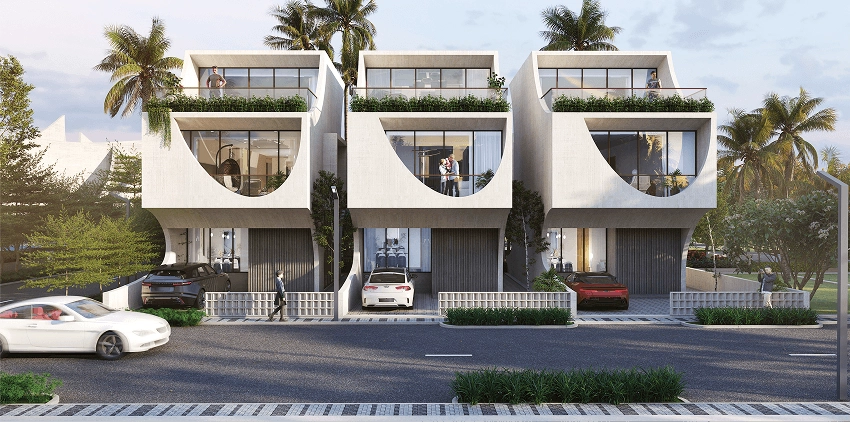
A villa is a standalone or semi-independent house, usually built inside an approved residential layout or gated township, with private walls, a small garden, maybe two floors, with proper roads, drainage, security, and a developer managing common areas.
Luxury villas in Indore are now clustered along growth corridors, and premium villas in Indore have seen rising demand from families upgrading from apartments.
Location plays an equally important role in choosing a premium villa, particularly when buyers are considering connectivity, nearby amenities, and future development.
The best locations to buy villas in Indore for premium living can therefore vary depending on whether the priority is family convenience, connectivity, or long-term investment potential.
What is a farmhouse?
A farmhouse usually sits on a larger piece of land, often originally meant for agriculture. People buy farmhouses for weekend retreats, small orchards, or simply to escape city life once in a while.
The catch?
A lot of farmhouse land in and around Indore is still technically agricultural, which brings us to the most important part of this blog.
Key legal differences: Land use, zoning & RERA applicability
This is where Rohan almost made a mistake. He was ready to put down a token amount on a “farmhouse plot” near the city outskirts, until his lawyer asked one simple question: “Is this land diverted for residential use, or is it still agricultural?”
That single question changes everything:
Diverted (NA) land has legally been converted from agricultural to non-agricultural (residential) use, usually through the local Collector’s office.
Agricultural land, unless converted, legally cannot be used to build a permanent residential structure in most cases, even if the seller says otherwise.
RERA registration typically applies to organized residential projects like villa townships, but many standalone farmhouse land parcels fall outside RERA’s scope, meaning fewer legal protections for the buyer.
Indore’s Master Plan classifies land zones for residential, agricultural, and mixed-use; villa townships are usually built strictly within approved residential zones.
Jurisdiction also differs: villa townships within city limits typically fall under Indore Municipal Corporation, while many farmhouse plots fall under Gram Panchayat jurisdiction, where approval processes can be less standardized.
This one factor- the legal aspects of farmhouses in Indore- is often the biggest source of regret for buyers who skip due diligence.
| Feature | Villa | Farmhouse |
|---|---|---|
| Typical land type | Diverted/NA residential land | Often agricultural, may or may not be diverted |
| RERA applicability | Usually applicable (organized township) | Often not applicable |
| Governing authority | Municipal Corporation / IDA | Gram Panchayat (in many cases) |
| Building permission | Mandatory, standardized | Often unclear or missing |
| Buyer protection | Higher (RERA + builder accountability) | Lower, needs independent legal check |
Ownership & title due diligence: What to verify before buying
Before signing anything, a smart buyer checks:
Clear title: no pending disputes or multiple claimants
Land diversion certificate: proof the land is legally residential, not just “promised to be converted”
Encumbrance certificate: confirms the land is free of loans or legal charges
Registered sale deed: the actual, legally registered ownership document
RERA project status (for villas): checkable directly on the MP RERA portal
Farmhouse land deals often carry red flags like verbal promises of “future conversion,” power-of-attorney sales instead of proper registry, or land still shown as agricultural in government records.
These aren’t deal-breakers by default, but they demand extra legal caution.
Approvals & documentation checklist
| Approval / Document | Villa (Township) | Farmhouse (Independent Land) |
|---|---|---|
| Layout approval | Handled by developer | Buyer’s responsibility |
| Building permission | Standardized, part of the package | Often unclear or pending |
| Completion certificate | Provided by developer | Rarely available |
| Land diversion (NA) proof | Pre-verified for the township | Must be checked individually |
| Time to secure approvals | Minimal, inherited | Can take months, sometimes longer |
Villas inside townships usually come with layout approval, building permission, and a completion certificate handled by the developer; you inherit a largely ready legal package.
Farmhouses, especially independent ones, often require the buyer to personally chase these approvals, which can take months and, occasionally, never fully happen.
Loan & financing differences
Banks are far more comfortable financing villas in approved townships than farmhouses on agricultural land.
Since villa projects usually have clear titles, RERA registration, and recognized developers, home loans process relatively smoothly.
Farmhouses without land conversion often struggle to qualify for standard home loans; buyers frequently end up paying more upfront or seeking specialized land loans with stricter terms.
Lifestyle comparison: Amenities, community & convenience
Now for the fun part: how does life actually feel in each?
Villa life: Feels like a hybrid: independence with support. Gated security, maintained roads, common gardens, and neighbours who become friends over evening walks.
It suits families who want space without giving up city conveniences like schools, hospitals, and malls nearby.
This combination of privacy, security, space, and access to everyday conveniences is one reason villas in Indore are becoming a preferred choice for luxury living, particularly among families moving up from apartments.
Farmhouse life: Feels like a retreat. Big open skies, room to garden, maybe even keep a few animals, and total privacy, but also managing your own security, water source, and repairs, plus a longer drive every time you need something from the city.
| Lifestyle Factor | Villa | Farmhouse |
|---|---|---|
| Security | Gated, often with guards/CCTV | Usually self-managed |
| Distance from city | Moderate | Often farther out |
| Community | Strong (neighbours, common events) | Minimal to none |
| Best suited for | Full-time family living | Weekend/occasional use |
| Land size | Compact, plot-based | Larger, open |
Maintenance, utilities & day-to-day living considerations
In a villa township, water supply, electricity backup, road maintenance, and waste management are usually handled collectively; you pay a maintenance fee, and things simply work.
On a farmhouse, you’re often your own utility manager: borewells, generators, and private upkeep are common, loved by some for the independence, exhausting for others over time.
Which one should you choose? Decision framework
Ask yourself three honest questions:
Is this my everyday home or a weekend escape? Everyday living leans villa; occasional retreat leans farmhouse.
How comfortable am I with legal complexity? If you’d rather avoid land-conversion headaches, a villa in an approved township is safer.
What’s my long-term goal, stability or scale? Villas typically offer steadier appreciation and easier resale; farmhouses can offer larger land value over time, but with a smaller buyer pool.
There’s no universally “right” answer, only the right answer for your life stage and comfort with paperwork.
For buyers focused on long-term value, understanding the top reasons to invest in villas in Indore in 2026 can help weigh factors such as appreciation potential, resale liquidity, legal clarity, and the convenience of established residential developments.
Investment & resale potential in Indore
Let’s do some quick, real-world math; numbers explain this better than adjectives.
Here’s the one formula every property investor should remember, the same compounding logic your fixed deposit uses, applied to land:
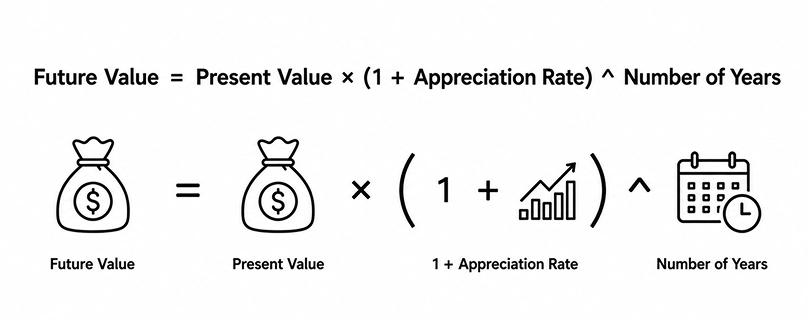
Future Value = Present Value × (1 + Appreciation Rate) ^ Number of Years
Villa example: Aditi buys a villa plot in a RERA-registered township for ₹40 lakh. Growth corridors like the Super Corridor and AB Road Bypass have historically appreciated around 8-10% a year.
At 9%: ₹40,00,000 × (1.09)^5 ≈ ₹61.6 lakh in 5 years.
Farmhouse example: Rohan buys a 1-acre farmhouse plot for the same ₹40 lakh. It can grow just as fast, sometimes faster, as the city expands toward it, but usually carries a liquidity discount, since fewer buyers want to navigate land conversion.
Even at 10% growth, an extra year or two finding the right buyer often erodes the gap once holding costs and time-to-sell are factored in.
The lesson: on paper, farmhouse land can outgrow a villa. In practice, a villa’s legal clarity often converts into a smoother exit, which matters as much as the growth number.
As a rule of thumb for any Indore property investment guide: villas offer predictable compounding with easy resale; farmhouses suit patient investors who value land size over speed of exit.
Real buyer insights: What Indore homebuyers are actually saying
Talk to enough people who’ve made this choice, and clear patterns emerge.
Below are two buyer snapshots, composite profiles based on common experiences in the Indore market, not verified individual reviews.
“The villa gave us structure; I didn’t have to think about security or water.” — Ankit, villa buyer profile, Super Corridor area.
Like many villa buyers, Ankit’s decision came down to security, ready infrastructure, and legal clarity. RERA registration made his loan approval faster and gave him confidence the builder was accountable.
“I wanted land I could actually breathe on; the paperwork just took longer than I expected.” — Priya, farmhouse buyer profile, AB Road Bypass
This mirrors what many farmhouse buyers report: privacy and space top the list, but so does time spent verifying land status. Buyers who checked diversion certificates upfront describe smoother ownership experiences than those who moved fast on price alone.
Whichever you choose, legal verification is non-negotiable. The buyers with the least regret are the ones who slowed down before signing, not after.
How Micro Mitti ensures legally compliant, investment-grade options in Indore
This is exactly the gap Micro Mitti was built to close. As India’s first PropTech real estate co-investment company, Micro Mitti focuses on removing the legal guesswork from buying property in Indore.
Take Micro Mitti Madhuvan, a RERA-registered (Reg. No. P-OTH-25-5927) plotted township spread across 30 acres, built on a forest concept for around 450 families.
Every plot sits on legally cleared, diverted residential land, backed by due diligence with global real estate firm JLL, architecture by Sanjay Puri, and landscaping by Envision Landscape Architects- the kind of rigor usually reserved for large institutional projects.
For anyone doing an Indore villa and farmhouse comparison, Madhuvan offers villa-style plotted living with farmhouse-like openness.
Plots start at 1250 sq. ft. but feel closer to 2500 sq. ft., with private backyard gardens, a resort-style clubhouse, and loan support from ICICI, SBI, HDFC, and Bajaj Finance, a genuine middle path for buyers who want space without giving up legal peace of mind.
FAQs
Question: Is farmhouse land legal to buy in Indore?
Answer: Yes, but only if the land has been properly diverted from agricultural to residential use. Always verify the diversion certificate before buying.
Question: Can I get a home loan for a farmhouse?
Answer: It’s harder than for a villa. Banks prefer diverted, clearly titled land; undiverted agricultural land often doesn’t qualify for standard home loans.
Question: Is RERA registration mandatory for villas in Indore?
Answer: For organized township projects above a certain size, yes, RERA registration gives buyers legal protection and transparency.
Question: What is the difference between NA land and agricultural land?
Answer: NA (non-agricultural) land has been officially converted for residential or commercial use, while agricultural land is legally restricted to farming unless converted.
Question: What are the best villas to stay in Indore?
Answer: The best villas in Indore sit in RERA-registered, gated townships along growth corridors like the Super Corridor and AB Road Bypass. Micro Mitti Madhuvan, a forest-themed township near Omaxe 1, is one such option.
Question: What is the best area to stay in Indore?
Answer: Depends on your priority. Families lean toward Super Corridor, Vijay Nagar, and AB Road Bypass. Investors watch the Ring Road and RE-3 corridor, where infrastructure growth is driving appreciation.
Question: What is the typical price range for farmhouses in Indore?
Answer: It varies widely. Smaller plots can start around ₹15-25 lakh, while larger, well-located parcels with proper roads and diverted land often run ₹50 lakh to over ₹1-2 crore. Always confirm whether the price reflects diverted land or raw agricultural land.