In This Article
ToggleKey highlights
- India hosts 1,800+ GCCs employing nearly 2 million professionals, and the number is growing fast.
- Tier-2 cities like Indore offer 40-60% lower office rentals and 15-25% lower talent costs versus metros.
- Madhya Pradesh’s GCC Policy 2025 targets 50+ GCCs and 37,000+ jobs in Indore and Bhopal.
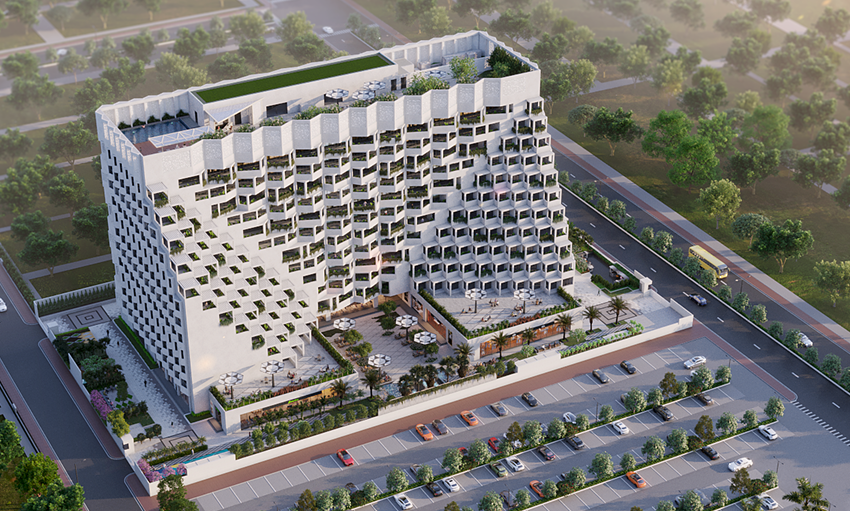
- Micro Mitti’s Cybercity AI IT Park in Indore is designed to be part of this emerging global ecosystem.
For years, global companies entering India had one answer: Bengaluru, Hyderabad, or Pune. These cities built India’s IT reputation, and they did it well. But rising costs, high attrition, and talent saturation in metros are now pushing global businesses to look further.
Tier-2 cities are no longer backup options; they are fast becoming the first choice, and Indore is right at the front of that shift.
“अब अवसर सिर्फ मेट्रो शहरों तक सीमित नहीं है — इंदौर जैसे शहर अब वैश्विक मंच पर अपनी जगह बना रहे हैं।”
This blog explains what a global capability centre is, why tier 2 city GCC growth is accelerating, and what the Indore opportunity means for businesses and investors alike.
What is a global capability centre (GCC)?
A global capability centre, commonly called a GCC, is a fully-owned subsidiary that a multinational company sets up in another country to handle core business functions. Unlike outsourcing, where work goes to a third-party vendor, a GCC is owned, operated, and managed by the parent company itself.
So what is a GCC actually doing? A lot more than people think. Modern GCCs handle:
- Software product engineering and development
- Artificial intelligence and machine learning research
- Finance, risk, and compliance functions
- Data analytics and business intelligence
- Cybersecurity, cloud operations, and IT infrastructure
The table below shows how a GCC differs from a traditional BPO. The distinction matters because it explains why global companies treat GCCs as strategic assets, not just cost-saving units.
GCC vs. traditional BPO: key differences
Feature | GCC | Traditional BPO |
|
Ownership |
Fully owned by the parent company |
Third-party vendor |
|
Functions |
R&D, AI, product engineering, finance, IT |
Data entry, call centre, basic support |
|
Strategic Value |
High — core innovation and decisions |
Low — transactional tasks |
|
Talent Level |
Senior engineers, analysts, specialists |
Entry-level, generalist |
|
IP Ownership |
Retained by parent company |
Shared or external |
The evolution of GCCs in India: from cost centres to innovation hubs
India’s GCC ecosystem has rapidly evolved from support and outsourcing centres into strategic hubs for innovation, AI, engineering, and digital transformation. The latest market data highlights the scale and growth potential of this sector:
Metric | Value |
|
2025 GCC Market Size |
USD 69.85 Billion |
|
2033 Projected Market Size |
USD 130.50 Billion |
|
Growth Rate (2026–2033) |
8.1% CAGR |
|
Largest Function (2025) |
Technology & Digital Services (38.2%) |
|
Fastest-Growing Function |
Data, Analytics & AI |
|
Leading GCC Companies |
Microsoft, Amazon, Goldman Sachs, JPMorgan Chase, Deloitte, HSBC, Shell, Citigroup, Bosch, Walmart |
Why are GCCs moving beyond metro cities?
Metro cities powered the first wave of GCC growth in India. But Bengaluru, Hyderabad, and Pune are now facing a saturation problem.
Office rentals in Bengaluru alone rose by approximately 20% in Q1 2025, while talent attrition remains persistently high, making it harder and more expensive to retain skilled employees.
This is accelerating tier 2 city GCC growth in a meaningful way. Tier-2 locations offer:
- 40-60% lower office rentals compared to metro markets
- 15-25% lower talent costs with no significant quality trade-off
- 10-15% lower attrition rates, employees stay longer
But cost alone is not the full story. Nearly 60% of India’s graduates come from non-metro regions. For years, that talent moved to metros for opportunity. Now, gcc in tier 2 cities is bringing the opportunity to where the talent already lives, and that changes the retention equation entirely.
The hub-and-spoke model has also emerged as a popular structure: Tier-1 cities serve as leadership and client-facing hubs, while Tier-2 locations act as deep-capability engineering and operations centres.
This trend is also driving demand across the top IT parks in Indore, which are becoming key destinations for technology and GCC expansion.
Tier-1 vs. tier-2 cities: why the balance is shifting
Factor | Tier-1 Cities (Bengaluru, Pune) | Tier-2 Cities (Indore, Jaipur) |
|
Office Rentals |
High & rising (~20% jump in Q1 2025) |
40-60% lower |
|
Talent Cost |
High, with wage inflation |
15-25% lower |
|
Attrition Rate |
Higher (job hopping is common) |
10-15% lower than metros |
|
Talent Pool |
Competitive, high demand |
Untapped: 60% of India’s grads are non-metro |
|
Quality of Life |
Traffic, high cost of living |
Better work-life balance, lower living costs |
|
Government Support |
Moderate |
Strong GCC-specific policies and subsidies |
This choice is not random, it connects to a broader national pattern we explored in Why Are India’s Tier-2 and Tier-3 Cities Becoming the Next IT Hubs?
Indore’s rise as a GCC destination: what makes it stand out?
Among India’s GCC hubs in Tier-2 India, Indore has a distinct profile. It is not just a city with cheaper office space; it is a city with real institutional depth, improving infrastructure, and strong government backing.
Indore’s growth as a business and technology hub is also closely connected with long-term urban planning in Madhya Pradesh. The Bhopal Master Plan 2047 offers useful insights into how cities in the state are planning for future growth and what Indore can learn from this approach.
1. Talent & Education
Indore is home to IIT Indore and IIM Indore. Add to this dozens of engineering and management colleges producing thousands of job-ready graduates every year. For global companies in Indore, this is not a compromise; it is a competitive advantage.
2. Infrastructure
As a Smart City, Indore has invested in road networks, digital connectivity, and urban development. The Devi Ahilyabai Holkar International Airport handles direct flights to major metros, easing travel for global business teams.
3. Cleanliness & Livability
Indore has been India’s cleanest city for seven consecutive years under the Swachh Survekshan rankings. For companies managing offices in Indore for global companies, the quality of life for employees is a major retention factor.
Projects like Cybercity IT Park Indore are helping create the modern office infrastructure global companies expect.
“इंदौर — जहाँ साफ़ सड़कें, स्मार्ट इन्फ्रास्ट्रक्चर और वैश्विक कंपनियों का भरोसा एक साथ मिलता है।”
Madhya Pradesh introduced India’s first GCC policy specifically designed for Tier-2 cities, the MP GCC Policy 2025. The policy targets 50+ GCCs and 37,000+ jobs across Indore and Bhopal, with:
- Capital subsidies of up to 40%
- Payroll assistance for eligible companies
- Skill development and training incentives
- R&D support for qualifying centres
This policy framework is a clear signal: GCC setup in Indore is not just possible, it is actively incentivised at the state level in ways that few other Tier-2 cities can match right now.
Cities like Jaipur, Coimbatore, Vizag, and Kochi are also in this conversation, but Indore’s combination of global capability centre, momentum, IIT/IIM talent, and state policy makes it one of the most compelling Tier-2 bets.
As Indore strengthens its position as a leading Tier-2 business hub, it’s also becoming a preferred destination for NRI real estate investment. Discover what’s driving this shift.
What this GCC boom means for Indore’s real estate market
When global companies in Indore set up operations, they don’t just create IT jobs; they create an entire demand ecosystem around those jobs.
This is the pattern that played out in Bengaluru, Hyderabad, and Pune over two decades, and Indore is beginning to trace the same arc.
Indore’s GCC growth is part of a wider transformation taking place across Madhya Pradesh. As technology, infrastructure, employment, and investment expand together, they can play an important role in Madhya Pradesh’s 2047 development strategy and its journey toward becoming a more developed state.
At Micro Mitti, we have been tracking this shift closely. Our flagship Cybercity IT Park in Indore is designed precisely for this moment, a mixed-use ecosystem built to support the kind of global-grade commercial, co-working, and business infrastructure that the GCC setup in Indore demands.
It is not just a real estate project. It is Indore’s answer to the question global companies are asking: ‘Is the infrastructure here ready for us?’
When a GCC sets up in a city, it brings:
- Mid-to-senior professionals relocating from metros
- Increased demand for quality housing near tech corridors
- Higher spending power is driving retail, hospitality, and services
- Rising land values in GCC-adjacent zones
This is what makes real estate in Indore GCC such a forward-looking investment theme. The value is not just in commercial zones, it is in the residential corridors, plotted developments, and premium communities that form around a growing talent economy.
For investors, this creates strong opportunities in commercial property investment in Indore, especially near emerging business hubs.
Conclusion
The GCC story in Indore is no longer a future possibility; it is already taking shape. Backed by the MP GCC Policy 2025, strong infrastructure, a skilled talent pool, and growing corporate interest, Indore is emerging as one of India’s leading tier-2 destinations for global capability centres.
At Micro Mitti, we see this transformation as a long-term opportunity. Cybercity AI IT Park is designed to support the next generation of GCCs with modern business infrastructure while offering investors exposure to one of Indore’s fastest-growing commercial corridors.
“इंदौर अब सिर्फ मध्य प्रदेश का केंद्र नहीं — यह भारत के ग्लोबल बिजनेस मैप पर एक नया नाम है।”
Whether you’re a business exploring expansion or an investor looking at future-ready commercial assets, now is the time to be part of Indore’s next growth chapter.
Connect with Micro Mitti to invest in the future of Indore.
Frequently asked questions (FAQs)
Question: What exactly is a Global Capability Centre (GCC), and how is it different from a BPO?
Answer: A GCC is a company-owned centre that handles core functions such as IT, R&D, finance, and AI. Unlike a BPO, it is not outsourced and focuses on strategic, high-value work.
Question: Why is Indore being considered for the GCC setup when Bengaluru and Hyderabad already exist?
Answer: Indore offers lower operating costs, strong talent availability, better employee retention, and attractive government incentives. It provides many of the advantages of metro cities at a lower cost.
Question: How does GCC growth in Indore affect real estate prices?
Answer: As GCCs create jobs and attract professionals, demand for office spaces, housing, and retail increases, supporting long-term property value growth.
As GCCs grow, office location and infrastructure become increasingly important. Learn more about office space requirements for IT companies in Indore.
Question: What is Micro Mitti Cybercity AI IT Park, and how is it connected to the GCC story?
Answer: Cybercity AI IT Park is a commercial development designed to support GCCs and technology businesses, providing modern office infrastructure in Indore’s growing IT corridor.